• Skip to primary navigation
  • Skip to main content
Algoa Bay Yacht Club

Algoa Bay Yacht Club

ABYC - Port Elizabeth's Friendly Sailing Club

  • About
    • ABYC on Wikipedia
    • COF Checklists
    • Constitution
    • House
    • Images
    • ABYC on Facebook
    • Members
      • ABYC Fleet
      • Member Database Update
      • Submit
        • Videos
        • Visitors
      • Yacht Performance Graphs
    • Social Media Mentions
    • Regattas
      • Calendar
        • Flags and Starting
      • Weather
      • NOR’s
        • Dinghy NOR’s
        • Keelboat NOR’s
      • ABYC Fleet
      • ABYC Week
      • Centenary Cup
      • Dinghy
        • 505’s
          • 5O5 Media Accreditation
          • 5O5 Events Programme
          • 5O5 Media Info Request
      • Great Circle
      • Lipton Cup
      • Medium Distance
      • Noordhoek
      • Pursuit
      • Rose Bowl
      • Scimitar Cup
      • St Croix
      • Small Circle Race
      • St Francis
      • Wednesday Sailing
  • Contact
    • Crew and Yacht Finder
    • Exco
      • Alan Straton
      • Frank Atkinson
      • Mark Dawson
      • Rodney Idris
      • Roger Lucas
      • Russel Morgan
      • Sean Wiseman
    • Join
  • Sailing News

What is your level of preparation? >> Scuttlebutt Sailing News – Scuttlebutt Sailing News

12 August 2022

Wally Cross with Quantum Sails is an inspired educator, and in this report he shares some of the secrets of doing well on the race course:


A 100% prepared sailing program does not exist but believing your boat and team is better prepared than your competitors allows you to enter the course with a high level of confidence.

The main ingredient for preparation perfection is not money, but a good system for organization.

Sailing with a well-prepared boat and team allows you to sail without concern about being a step behind. A boat that is prepared is looked at in pieces, each is equally as important as the other.

The Boat
Picking the proper boat to race in a one-design class or handicap is the first step in being prepared. Your boat should be strong, light as possible, clean and attractive. I claim my car runs better when I wash it, and I do believe a nice clean boat sends a message of speed.

The individual pieces of the boat are collectively important. Take note of the details that are essential to each piece:

• Hull/Deck/Interior: dry, strong, waterproof, clean, attractive
• Bottom/Keel/Rudder: fair, symmetrical, smooth, hard finish
• Rig/Boom/Prod/Pole: polished, low windage
• Rigging Standing/Running: low stretch, clean, well-marked
• Instruments: calibrated, consistent, true values
• Sails: proper shape, strong, wide range
• Hardware: efficient, light, strong, minimal

To compete at the top of your class, every component of your boat needs to fit together. Sails are not more important than the bottom being right, or the mast smooth, or instruments working well. They all must be well looked over and maintained to be the best possible piece to your preparation puzzle.

The Team
Your crew needs to buy into the system for sailing your boat. Each boat is managed differently, yet the best teams work well together not only on the water. For this article I am assuming the team consists of all Corinthian sailors who hold down normal jobs and can only sail a few selected events each year.

Goals for winning teams:
• Recording settings: history of all racing, meeting prior and after racing
• Three teams:
» Speed: rig, sail trim, steering, weight (heel-trim)
» Information: race instructions, weather, wind, competition, instruments
» Mechanical: tacking, gybing, hoist, douse
• System to record, remember, evaluate, improve
Logistics
Everything unrelated to the boat or sailing is logistics. Some racing programs have separate people or persons that handle all organization that makes racing easier.

Logistic tasks are:
• Regatta dates, crew practice, time at boat
• Delivery of boat
• Lunches, liquid, meals
• Registration, hotels, flights
• Safety requirements
• Rules, ratings, membership

Teams that are organized with a logistic system sail with more confidence. They also benefit from having less concern with details unrelated to sailing.

Bayview and Chicago Mackinac Races 2022
This year’s Mackinac races were a tale of two extremes. The Bayview race was about 12 hours longer than normal while the Chicago race was almost 12 hours faster. I had the pleasure of racing on the J/120 Proof as owners Mike Fozo and Robin Kendrick were kind enough to allow me to sail both races on their boat.

The process for race winning preparation started the winter of 2021. Once I know what boat I am sailing for the next summer’s races, I start making a list of items to check off. My checklist includes:

• Bottom of Boat: make sure it is fair, hard paint, smooth, low drag
• Interior: light in weight, minimal weight forward of mast, aft of ladder
• Mast, Boom, Deck: running, standing, rigging (all in great shape – not too much)
• Minimal spare equipment all in one dry bag
• Order 30-liter dry bags for crew gear
• Dry bags for all safety equipment
• Jet boil burner for hot liquid and freeze dry food
• Sail Upgrade: new A2, new GS Staysail (check over all sails)
• Instrument Goals: accurate true values with heel, fore and aft trim value
• Crew and numbers (usually one or two more for Port Huron than Chicago)

Mike Fozo was great at assembling all the pieces necessary to have a prepared J/120 for the 2022 sailing season. We would meet at the boat to see how we could concentrate weight more in the mid-section and less in the ends. Also, time was spent getting the rig set for changing conditions. We spent one day looking at all the possible sail options and starting a crossover chart.

The crossover chart describes where your sails fit in terms of wind angle and wind speed. It takes time to make this chart accurate. We can make a generic one for any boat, yet each time spent on the water is valuable in perfecting this chart. An accurate chart minimizes decision making when making a sail call.

The boat now was getting close to being prepared for the first of two long races. The Bayview race started on Saturday, July 16. This was our preparation timeline:

July 11 – crew information on boat call (3 hours prior to start)
July 12 – day one of weather information (all weather models)
July 13 – boat is pulled out of water to clean and make boat bottom smooth
Jul 14 – more weather information and final sail selection for boat delivery to Port Huron
July 15 – boat leaves early to Port Huron, more weather information, crew is updated on conditions
July 16 (Race Day) – morning weather call, travel to boat, meeting on boat 3 hours prior to start, leave dock 2.5 hours prior to start, wash bottom near starting area with banding prop 1.5 hours prior to start, start sailing 1 hour prior to start

This timeline of pre-race preparation allows the team, and especially me, to feel prepared. Starting the race with all the boxes checked allowed us to handle the challenging light conditions. Knowing that this race was going to be slow, we put an emphasis on:

• Clean and smooth boat bottom
• Sails for light winds
• Minimal spare equipment
• Weight placement low, forward (trim meter 0 to -1 degrees of bow down trim)
• Rig set for lighter winds (turns off V1 shrouds)
• Weather information every four hours

The result was winning the class by almost an hour.

The Chicago Mackinac was one week after the Bayview race. One of the bigger challenges for this race was getting the boats from Mackinac Island to Chicago. The mid-summer southerlies were in rare form, making traveling south a slow journey for all teams. It was clear by the Wednesday prior to the race’s start that this was going to be a much different race.

The prediction for the 2022 Chicago Mackinac race was storms.

The Chicago Mackinac Race started on Saturday, July 23. Our timeline for preparation was:

July 20 – change from light air sails to sails for more wind
July 20 – weather information (more accurate when velocity is higher)
July 20 – boat still in transit from Mackinac to Chicago
July 21 – boat arrives in Chicago after a tough delivery
July 21 – crew information on boat call and gear to bring for increased winds
July 22 – updated weather information continues to predict high winds in storms
July 22 – boat inspection, crew to meet at boat next day 3 hours prior to start
July 23 – crew meets at boat for pre-race meeting:
• Discussion on how to prepare for squall, sails, goals, execution
• Shift in watch system, early rest to sail all night in big breeze
• Starting goals with big picture set up
• Morning rain and effect with land breeze
• Bottom cleaning at dock
• Dock out 2 hours prior to start

Unlike the Bayview race, this one started out fast and as predicted, the storm squall did arrive late evening and continued throughout that first night. Two hundred forty boats raced in the Chicago-to-Mackinac and 29 had to drop out because of boat failures. Fortunately, the Proof team was prepared and pushed hard all evening to win the class and the overall prize by almost two hours over the next boat.
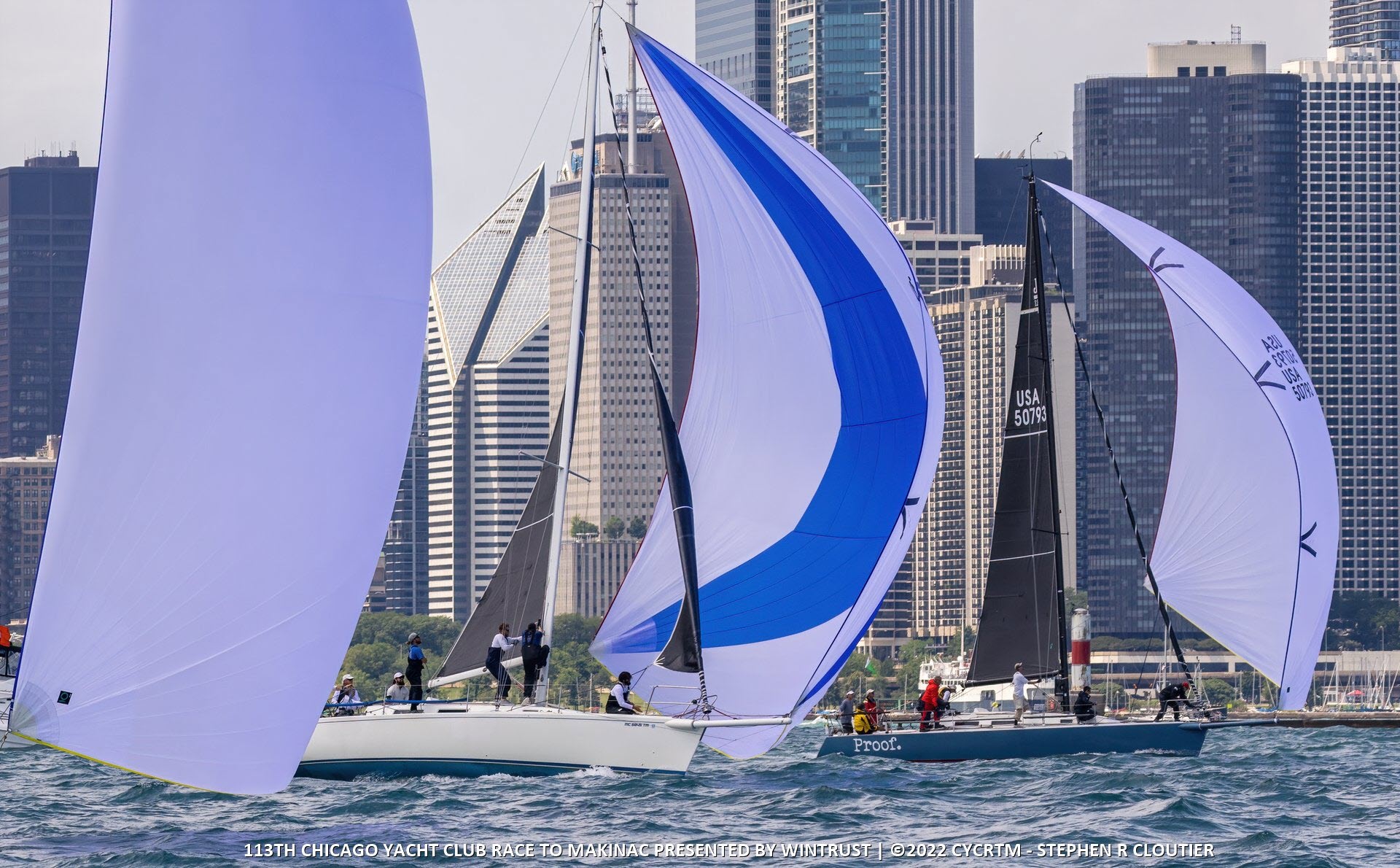
Proof at start of Chicago Mackinac Race

I enjoy being a part of a well-prepared program and watching teams that illustrate how preparation can bring success. After the finish of the Chicago Mackinac race, I went to Harbor Springs in northwest Michigan to watch the Ugotta Regatta in one of the most beautiful areas in the world.

Harbor Springs did not disappoint in weather or wind, and both were perfect for racing all different sizes and styles of boats. The one boat that stood out to me was Doug DeVos’ TP52 Windquest. They do set the standard for an extremely well-prepared boat and team.

I had the pleasure of racing on Windquest last summer at Bay Harbor. The level of preparation was the highest I have ever seen. Meetings in the morning and after sailing allowed the team to review and plan on productive days.

A well-prepared sailing team and boat will produce better results. A team that feels prepared expects to have a good finish versus simply hoping to do well.

What is your level of preparation?


Filed Under: Sailing News Tagged With: Google News

Boat Review: Dufour 61

11 August 2022

Dufour, long one of France’s most well-respected builders, has been producing sailboats in La Rochelle since the dawn of fiberglass boatbuilding. Having recently merged with another La Rochelle-based builder, Fountaine Pajot, Dufour has now joined other European mass-production yards in producing a large-scale luxury cruising yacht. Its new Dufour 61, winner of SAIL’s 2022 Best Boat Award in the Flagship Monohull category, combines a competitive price point with high-end comfort and some seat-of-the pants performance.

Design & Construction

Dufour has been working with Italian designer Umberto Felci since the turn of this century when it bifurcated its models into a Grand Large cruising range and a Performance racing range. Stepping now into the big-boat luxury cruising market, Dufour has again teamed with Felci to create a boat that hews to the contemporary design idiom: lots of beam carried aft with a hard chine to increase initial stability, a low-profile cabinhouse, an open flush foredeck and an efficient T-bulb keel.

The boat’s construction is fairly straightforward. The fiberglass hull laminate is solid below the waterline, with the topsides cored in end-grain balsa. An internal aluminum grid supports the keel, which boasts lead ballast. The infused deck is also cored with balsa. Finish quality is better than average for a mass-production vessel.

On Deck

The Dufour 61’s cockpit layout is modern in every respect. There are twin wheels aft turning one deep rudder, and I was pleased to see engine controls and a full set of instruments at both helm stations. All lines are led aft under the deck to two pairs of Lewmar 65 winches positioned just in front of each station. The double-ended German mainsheet is controlled via a narrow bridle positioned atop a tall carbon-fiber arch at the forward end of the cockpit…

Read more on Sail Magazine

Share this:

Filed Under: Sailing News Tagged With: XA Sailing

Behind the Scenes, August 2022 >> Scuttlebutt Sailing News – Scuttlebutt Sailing News

11 August 2022

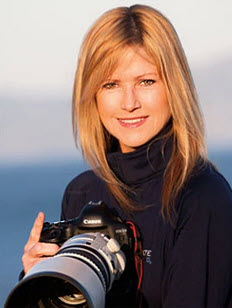
Sharon Green

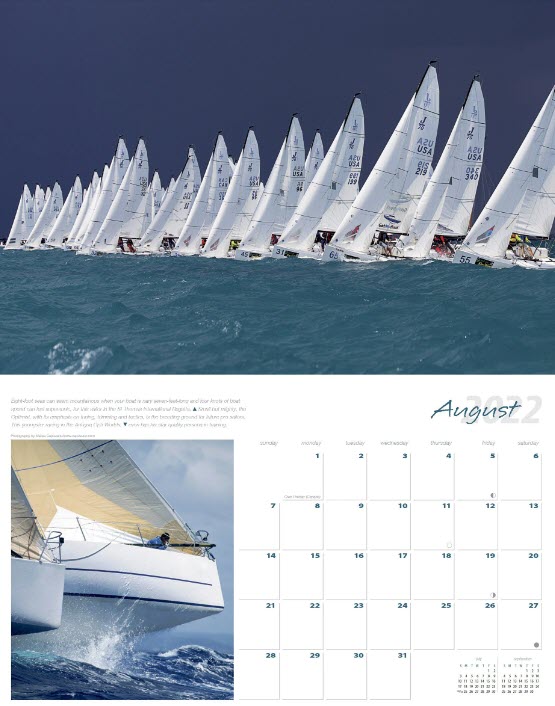
The walls of Scuttlebutt HQ include the Ultimate Sailing calendar, and in this report Sharon Green shares the behind-the-scenes story regarding the August 2022 images.


One-design racing – as featured in the August 2022 pages of the Ultimate Sailing Calendar – provides a thrilling and unique indulgence for a photographer. Not only are the starts and mark roundings always so close and exciting, but the symmetry of the lines and designs creates an extraordinary artistic opportunity.

The harmonious arrangement of shapes and forms is like a visual metronome, as the conformity of hulls and sails contrast with the incongruous sea and sky. Light, lines, shapes, shadows … it is such an incredible delight to be able to create works of art like these, in the midst of a yacht race!

August 2022

At the top, a fleet of J/70s dash off the starting line on the first day of Key West Race Week. I’ll admit, this was the one time I actually liked the uniformity of all-white boats and sails! That morning, as we headed out on our super-sonic photo boat, storm clouds were looming on the horizon.

My big question in capturing a start always is: do I position myself at the committee boat end or pin end of the start line? Followed by the next big question of which lens to choose. Do I want to shoot tight with a big zoom lens, or wide angle? It’s never an easy answer!

On this foreboding morning I decided to set up on the pin end: with the dark sky in the background, but the boats still illuminated by a sliver of sunlight. We jockeyed for the perfect position, thanks to skilled driving by our captain Mike Weinhofer: not directly at the pin, but slightly upwind.
It was here, an instant after the start, that the racers lined up smartly. Of course, not every start is so perfectly organized like this one! But the J/70s – still fairly new at this point – were well-sailed by talented sailors who were spot-on with their timing.

As you can see the image is compressed, because of the telephoto 200-400mm lens with 1.4 extender I chose, shooting at an exposure of 1600 shutter speed with an f6.3 aperture, ISO 320 on a Canon 1DX.

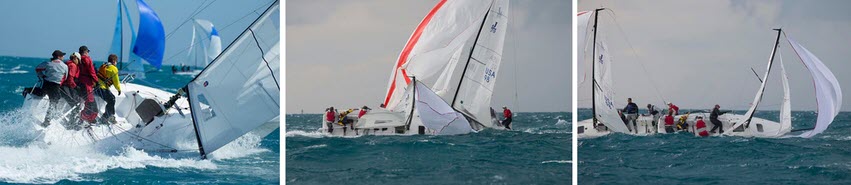
I remember the fleet got off the line impeccably, but after they rounded the windward mark and returned downwind, the squall hit! The tender J/70s were no match for the blasting breeze: it was like watching the shoot-a-duck game at a carnival.

The boats broached in rapid succession – Bam! Bam! Bam! – flattened by the gusts. No-one was injured or damaged, but it was a gnarly intro to Key West Race Week 2014!

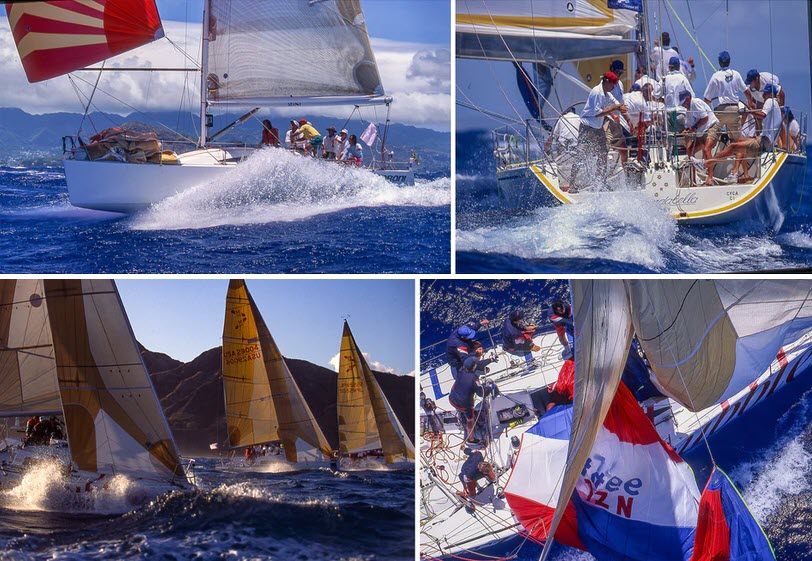
The bottom image also illustrates the striking beauty of symmetry, with these twin bows leaping out of the waves during Kenwood Cup 1994. This was truly a fresh-to-frightening day (my favorite!) off the shores of Waikiki.

I was working alongside the great photographer/videographer Laurie Gilbert, and we were in a huge power boat bashing to weather. We had set up at the windward mark to capture the close action and skill of the competitors as they approach the buoy; here with the the bowman creeping forward in ferocious seas, preparing to launch the spinnaker pole.

Every aspect of yachting photography has its unique appeal, but the creativity a one-design fleet provides is especially rewarding to my calling as a visual artist.

Editor’s note: Sharon will be at the Block Island Film Festival September 10 at 3:45PM when the documentary short film “Fresh to Frightening – The Sharon Green Story” will be featured, followed by a Q&A. Details: https://blockislandfilmfestival.org


Filed Under: Sailing News Tagged With: Google News

Malizia Ocean Festival in Hamburg

11 August 2022

Boris Herrmann’s Team Malizia hosting Malizia Ocean Festival and Boat Christening in Hamburg

by Team Malizia 12 Aug 05:24 AEST 6-7 September 2022

Boris Herrmann in Hamburg © Ricardo Pinto / Team Malizia

Marine Auctions 2019 600x500
Armstrong-FG-5 300x250
Malizia Ocean Festival programme © Team Malizia
Malizia Ocean Festival location map © Team Malizia
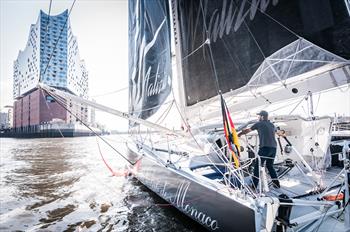
German skipper Boris Herrmann and his international team will sail to Hamburg aboard their brand new boat Malizia – Seaexplorer to christen the boat in Boris’ home city and to celebrate the Malizia Ocean Festival.

This two-day public event around sustainability and ocean protection will take place on 6 and 7 September 2022 in the heart of the Northern German city, with the christening of their new boat being a highlight of the festival.

Back in town! Boris Herrmann and his Team Malizia will celebrate the first Malizia Ocean Festival in the heart of Hamburg, the Traditionsschiffhafen, on 6 and 7 September 2022. With a large two-day event and a new boat, the team wants to share the adventure of their sport with the German public and their partners who have supported them since the start of the Vendée Globe.

This public event features highlights such as the christening of the new Malizia – Seaexplorer, as well as exciting events and tents including exhibitions on sustainable shipping, sustainable materials, coral protection and virtual reality experiences. Live music, food trucks and fresh drinks will contribute to a festive ambience on the pontoon of the Traditionsschiffhafen and the Magellan Terrassen.

On this occasion, Boris Herrmann and his Team Malizia will sail from Lorient, France, where they launched their new Malizia – Seaexplorer on 19 July, to the northern German city. The arrival will be a very special moment, as it will be the first time since 2018 that the Vendée Globe skipper will be in his hometown with his race yacht.

Accompanied by a flotilla, Malizia – Seaexplorer will navigate up the Elbe River towards Hamburg on the morning of the 6 September, which will be streamed live on a large screen at the festival location and on the news. At 12:30 p.m, the Mahatma-Gandhi bridge will open to let the 27-metre-tall IMOCA into the Traditionsschiffhafen.

Once moored, the Malizia – Seaexplorer will be christened at 1:00 p.m. (see below for the detailed programme). A press conference will follow from 1:30 to 2:30 p.m and the opportunity for journalists to exchange with Boris Herrmann and the team. The afternoon will continue with a panel discussion with female climate change advocates, and the opening of the exhibitor tents village where visitors of all ages can learn more from the team and their partners around sustainability, science, and climate change. “My Ocean Challenge” kids activities, music, refreshments and food, games, and learning opportunities will be accessible all day, from 10:00 a.m to 10:00 p.m. The evening will be punctuated with the vernissage of the Open-ART Malizia – Seaexplorer exhibition, an open-air art installation organised with the Überseequartier which will be displaying Team Malizia’s greatest photographs over the next 7 months in the Hafencity, starting 6 September.

On 7 September, the Malizia Ocean Festival will begin with the launch of Birte Lorenzen-Herrmann’s new children’s book “My Ocean Challenge – Kurs auf Klimaschutz” and a press conference with journalists and children at 10:00 a.m. The partners of the festival will be presented over the day to also talk about their exhibition or run workshops with the public.

Team Malizia is joined in its effort to be one of the most exciting sailing teams and a champion for sustainability and climate action by seven main partners: EFG International, Zurich Group Germany, Kuehne+Nagel, MSC Mediterranean Shipping Company, Hapag-Lloyd, Schütz and the Yacht Club de Monaco.

Cyclops 2022 May MPU
Ensign 2022 July - Sail MPU

Filed Under: Sailing News Tagged With: Sail World

This is how navies conducted man overboard drills during the Golden Age of Sail – We Are The Mighty

11 August 2022

The Golden Age of Sail was a historical period that went on for at least four centuries during which sailing ships’ supremacy in world commerce and warfare grew to its height. Especially with the emergence of naval weaponry, and eventually peaked at the dawn of the analog Age of Steam. It is recognized as a different aspect of the modernity period and the Age of Enlightenment, thanks to the advancements in navigation. It refers to a more specific Eurocentric Age of Sail, whereas the Age of Sail in general relates to the culmination of a lengthy international history of sailing. 

Any Marine or sailor who has crossed the Atlantic on a M.E.U. knows the sea may be rough. The Navy conducts man-overboard and takes them seriously. Back then, the Navy experienced numerous instances where men were thrown overboard and needed rescue. The situation was worse during the age of sail because the men did not have the advanced equipment necessary to recover someone like today.

During the Golden Age of Sail, before traveling through ships became so prominent, man overboard cases would go undetected until the ship got to the destination. When they realized some men would be tossed into the sea, they came up with new measures. First, an officer was put in charge of the activity to enhance control and order if it occurs. The officer would regularly count men onboard to countercheck against the number of men who officially boarded. Suppose the officer noted a missing crew member, they would analyze when they were last seen on the ship. If it happened less than two minutes before, then the rescue would begin. Unfortunately, the Navy did not have the equipment to facilitate deep-sea diving during these periods, so the men would only reach where they could.

After realizing there were only a few men on the ship who could dive, the Navy prioritized training the men in preparation for the incident. Whenever a new deployment started, the crew would perform practice runs of this overboard drill to get ahead of the incident. Part of the training was also swimming lessons to give the divers an easier job finding the man thrown over. Once the crew member was found, they would examine them for injuries and provide warm clothing.

Man Overboard Drills Today

Today, the Navy inherited these drills out of necessity from a by-gone age. Today, the Navy’s standard rapid reaction time for retrieving a man from the sea is five minutes. Five minutes, however, is a lifetime for victims of man overboard. During their practice sessions, the crew members are encouraged to act swiftly. They often use dummies during the training sessions, although they cannot compare to humans. For one, the dummy is orange hence easier to locate, unlike humans. This makes it even harder during a sudden night op.

In that case, if it occurs at night, the men in charge of the rescue use flares to direct the squad as it prepares to launch from the main vessel on a small craft. These flares also guide them on where to check to avoid covering large areas for no reason. The rescue becomes easier if the seas are calm for obvious reasons. Although man overboard issues are not so common these days, the Navy still prepares its servicemembers for it.

MORE TO READ

Filed Under: Sailing News Tagged With: Google News

Everything you need to know about MMSI Numbers

11 August 2022

Icom UK Knowledge Base Article: Everything you need to know about MMSI Numbers

by Ian Lockyer, Icom UK 12 Aug 02:00 AEST

Entering an MMSI Number (Maritime Mobile Service Identity) into a marine radio © ICOM UK
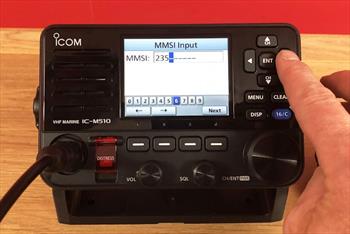
Icom UK has put together an article in their website’s knowledge base section, answering all the most common questions they receive from customers about MMSI (Maritime Mobile Service Identity) numbers.

The article answers the question of what an MMSI number is, how they are used and where to get one. It also answers some of the questions about entering your MMSI number into the radio and the different procedures regarding handheld DSC radios.

To read this article for free on ICOM UK’s website, see Everything you need to know about MMSI Numbers!

To learn more about Icom’s range of marine radios, please visit the Marine VHF Radio section on the Icom UK website. Alternatively, contact their sales team on 01227 741741 or email .

Filed Under: Sailing News Tagged With: Sail World

  • « Go to Previous Page
  • Page 1
  • Interim pages omitted …
  • Page 1805
  • Page 1806
  • Page 1807
  • Page 1808
  • Page 1809
  • Interim pages omitted …
  • Page 3353
  • Go to Next Page »

Copyright © 2005 - 2026 ABYC · Gqeberha (Port Elizabeth), Eastern Cape, South Africa | Privacy Policy